

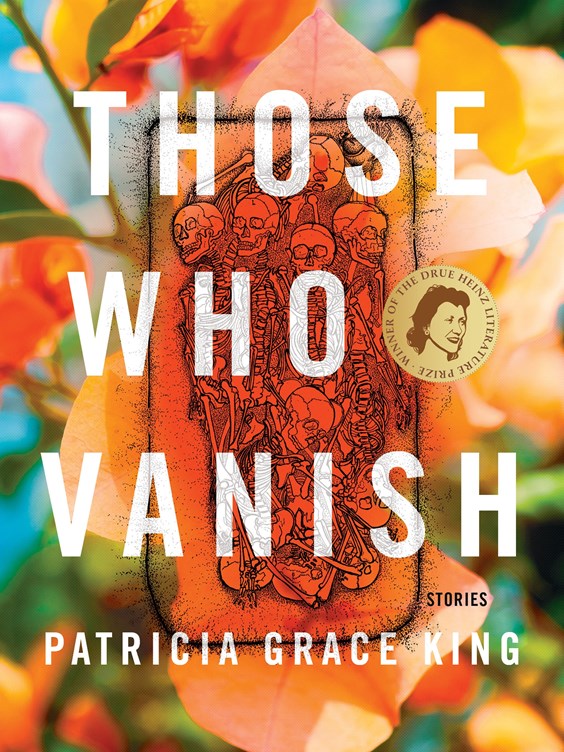
In the author’s note at the beginning of her new book, Those Who Vanish, Patricia Grace King explains that the war that ravaged Guatemala from 1960 to 1996 had been called a civil war for decades but in fact was a reign of state-sponsored terror, resulting in 200,000 civilian deaths and 1.5 million displaced refugees. The eight stories that comprise her book recount this history through relatable characters, both Guatemalan and American, who lived through those decades of terror and their ramifications.
King grew up in North Carolina and is now based in England, but from the stories in this collection, it’s obvious that Guatemala occupies a central place in her heart. She lived in Guatemala for a number of years and centers some of her stories around peace NGO workers. In “Rubia,” King captures the allure of Guatemala for middle-class Americans in the 1990s.
Guatemala in its last decade of war could act on you like a magnet. If you belonged to a type — by which I mean young, North American, most likely white, idealistic, with time and money to burn — and wrong seemed so clearly defined. This was bracing. Also, objectively, Guatemala was gorgeous; many parts of it are.
The last two stories in the book — “Adiós and Adiós” and “Day of All Saints” — center around an American named Abby and a Guatemalan named Martín. Both are in their late teens and meet at a Spanish language school in Guatemala City. She enrolls before starting an internship with a professor friend of her stepfather’s. Martín is a recent high school graduate and teaches at the school. He’s now used to Americans and their naivety and lack of awareness, yet he still finds himself shaking his head when awkward conversations arise. When Abby is still a new student, she shows Martín her tattoo, an image of Icarus on the small of her back, and asks if he has a tattoo. She doesn’t understand when he tells her that would be impossible. This was a time, after all, when only the combatants in the decades-long war had tattoos.
Abby and Martín start dating and she ends up proposing to him before she returns to the U.S. For a while their marriage plans seem promising as Abby goes through the necessary procedures to obtain a fiancé visa for Martín. When he flies to Chicago, where she’s now studying, the only work he can find is in landscaping. The idealism that sustained them in Guatemala wears thin in Chicago.
Another story takes place at a Mennonite summer camp in Kentucky. “Small Country” revolves around a girl named Penny who moves from Guatemala — where her parents were involved in peace work during the war — to her father’s home state of North Carolina. King’s vivid writing describes Penny’s sudden departure from Guatemala months before she starts camp hours from her new home.
All my life till last Christmas, Spanish was the air I moved through. In the streets of Santa Cruz del Quiché; at my school, at the community center where my parents worked. But Spanish fell away from me, swiftly as the land did that morning as our plane rose — the rooftops and billboards of Guatemala City blurring past my round window, then dropping, and soon we were over those mountains where I’d spent my life. Wrinkles on the blue dimming ground. Minutes later came the low hot greenness of the Petén, and then we were out, we had left it behind and below. Guatemala is a small country. But it didn’t feel small until then.
Those Who Vanish is a beautiful book and it’s not surprising that it won the 2026 Drue Heinz Literature Prize for short fiction. All of the stories all examine some aspect of the war years in Guatemala. King doesn’t pass judgement on idealistic Americans, whether they’re teens like Abby in “Adiós and Adiós” and “Day of All Saints” or adults like Penny’s parents in “Small Country.” It’s not a crime to want to help others in need, but as King shows, idealism often comes at a cost. When people have never experienced war, it’s difficult to comprehend the toll of violence and what it does to a country and its people. Books like King’s can help bridge this gap by instilling empathy and understanding.
FICTION
Those Who Vanish: Stories
By Patricia Grace King
University of Pittsburgh Press
Published September 1, 2026


